

Updated: October 2026 · By the Elder Welder Team
Disclosure: We make the Elder Welder outlet and vent safes mentioned below. We don't earn anything from the other products or services in this guide. Ratings and prices come from Amazon.com and elderwelder.us in October 2026 and change often.
Short answer: The best place to hide gold at home is a spot that looks like part of the house, sits outside the primary bedroom, and is split across at least two locations. Small amounts of coins fit well in a wall outlet safe or a vent safe in a hallway, laundry room or home office. For a large holding, a bank safe deposit box or a heavy safe bolted to the floor is the better fit, ideally with a separate insurance rider.
Where is the best place to hide gold at home?
The best place is somewhere a quick search skips: an ordinary-looking fixture in a room with little else of value, not a drawer or closet in the bedroom. Gold is small and dense, so it doesn't need much space, and that makes wall-mounted hiding spots practical.
Good options, in rough order of discretion:
- A wall outlet safe in a hallway, laundry room or garage wall. It looks like one more outlet near the floor.
- A vent safe in a wall where a return vent looks natural. It holds far more than an outlet safe, so coins can share space with documents.
- Inside something boring and heavy, like a box of old tax files or a bag of tile grout in the garage, for a second, smaller hiding spot.
- A bolted-down home safe, if you accept that a safe tells everyone where the valuables are. Use it as a decoy or for documents, and keep some gold somewhere else.
For more placement ideas room by room, see Best Places to Hide Valuables at Home (and Where Burglars Look First).
How do the options compare?
| Option | Example | Fits | Install | Main trade-off | Price (Oct 2026) |
|---|---|---|---|---|---|
| Wall outlet safe | Elder Welder Hidden Outlet Safe (4.4 of 5, about 525 Amazon reviews) | A few coin tubes, small bars, rings | Cut drywall, under 30 min | Small capacity; held by drywall, so don't overload it | $29.97–$74.97 |
| Vent safe | Elder Welder Hidden Vent Safe (4.3 of 5, 140 reviews, combination version) | Coins plus documents (300+ cu in) | Cut drywall between studs, under 20 min | Needs a spot where a vent looks natural; never in a real duct | $129.97–$159.97 |
| Book safe | KYODOLED Diversion Book Safe (4.7 of 5, about 1,980 reviews) | A few coins | None | Can be carried away; shelves get searched | about $15–$22 |
| Bolted-down home safe | SentrySafe STW123GDC, 1.2 cu ft (4.4 of 5, about 9,760 reviews) | Large holdings and documents | Bolt to floor | Visible target; a burglar knows where to work | about $287 |
| Bank safe deposit box | Your bank | Large holdings | None | Only open in banking hours; contents not FDIC-insured | annual fee, varies by bank |
Where should you never hide gold?
Avoid the places people check first: the primary bedroom (nightstand, dresser, under the mattress), the freezer, the toilet tank, shoe boxes in the closet and anything labeled "jewelry." These spots are popular precisely because they're easy, which is also why they're on every searcher's list.
Also avoid spots that can damage or lose the gold, such as a real HVAC duct, a hole in the yard you might forget, or a container you could accidentally throw out. And don't hide everything in one place.
How much gold should you keep at home?
Keep only what you'd be comfortable losing without insurance, and store the rest in a bank box or with a professional depository. A standard homeowners policy pays very little for bullion: New York's Department of Financial Services lists a typical special limit of $200 for "money, bank notes, bullion, gold & silver." If your holding is larger, ask your agent about a scheduled rider or a separate policy.
Burglary is less common than a decade ago, but it hasn't gone away. The FBI estimates 661,800 burglaries in 2025, and 53.4% of them hit residential properties.
Is a home safe or a safe deposit box better for gold?
For large amounts, a safe deposit box is usually the safer choice; for gold you may need on short notice, home storage is more practical. The FDIC notes that a home safe is easier for a burglar to get into than a bank box, but also that safe deposit box contents are not covered by FDIC deposit insurance and banks generally don't insure them either.
Many people split the difference: most of the holding in a bank box, a small amount at home in a hidden spot, and a written inventory with photos stored separately.
How do you hide gold in an outlet or vent safe?
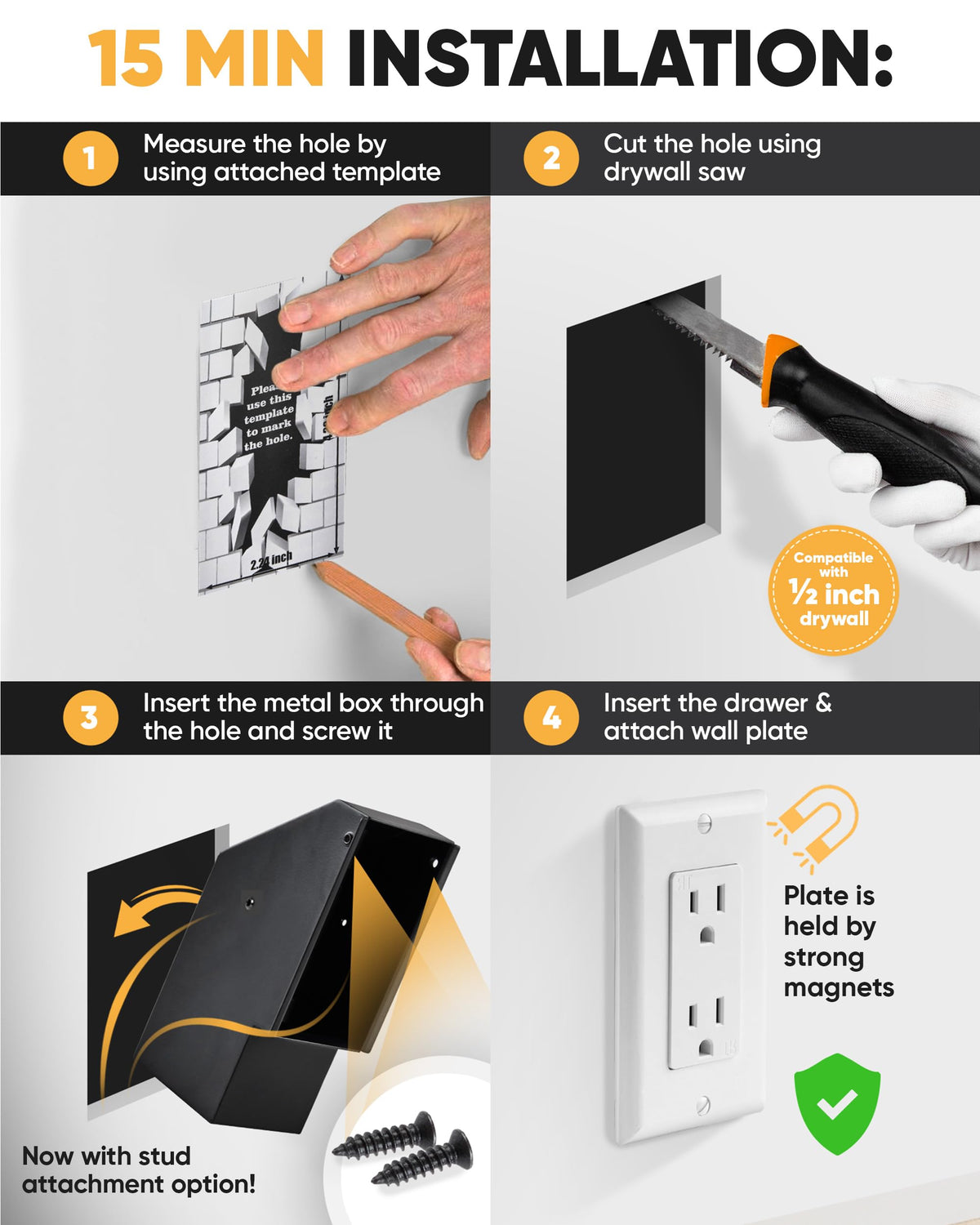
Choose an empty drywall bay with no wiring or pipes, install the safe at the same height as the room's real outlets or vents, and keep the coins in a soft pouch or tube so they don't rattle.
- Outlet safe: best for a few coins, a small bar or rings. Pick a single (about 30 cu in) or double (about 50 cu in), with a key lock or no lock. See the Hidden Outlet Safe.
- Vent safe: best if you also want to keep documents or a larger coin set in the same spot. The metal box sits between studs 16 inches on center behind a magnetic vent cover, with a combination or fingerprint lock. See the Hidden Vent Safe.
Gold is heavy for its size, so spread a bigger holding across more than one location rather than filling one box. For a side-by-side look at other hidden safes, read Best Hidden Safes for Home (2026).
What hidden safes can and can't do
An outlet or vent safe is concealment, not a certified safe. It keeps gold out of sight and quick for you to reach, and it lowers the chance it turns up in a fast search. It can't stop someone with time, tools or inside knowledge, and it won't protect against fire or flood. An outlet safe is not a working outlet and must never be connected to electrical wiring. For irreplaceable or high-value holdings, use a bank safe deposit box or a rated, bolted-down safe, insure the gold properly, and keep good locks, lighting and an alarm as your first line of protection.
Frequently asked questions
Where is the safest place to hide gold at home?
A spot that looks like a normal part of the house and sits outside the bedroom, such as an outlet safe in a hallway or a vent safe in a laundry room. Split larger amounts between at least two places so one discovery doesn't cost you everything.
Is it legal to keep gold at home?
Yes. In the United States you can keep gold coins and bars at home. Check your homeowners policy, because most cover only a small amount of bullion unless you add a rider.
Is gold kept at home covered by homeowners insurance?
Usually only up to a low special limit. New York's Department of Financial Services lists a typical limit of $200 for money, bullion, gold and silver. Ask your agent about scheduling the gold for its full value.
Should I keep gold in a safe deposit box instead?
For large amounts, often yes. A bank box is harder to break into than a home safe, but it is only open during banking hours, and the FDIC notes its contents are not covered by deposit insurance.
Can burglars find gold with a metal detector?
Most burglars work fast and don't carry one. The bigger risk is a quick search of the bedroom and obvious containers, which is why an unexpected, ordinary-looking spot matters more.
Sources
- FBI, Reported Crimes in the Nation, 2025 (Crime Data Explorer): burglary estimate and residential share, data year 2025.
- FDIC, Five Things to Know About Safe Deposit Boxes, Home Safes and Your Valuables.
- New York State Department of Financial Services, Homeowners Insurance: Basic Coverage and Adding Coverage.
- Ratings, review counts and prices: Amazon.com product pages and elderwelder.us, checked October 15, 2026.
Share:
Best Places to Hide Valuables at Home (and Where Burglars Look First)